
Why guitar finish thickness matters — protection vs. performance.
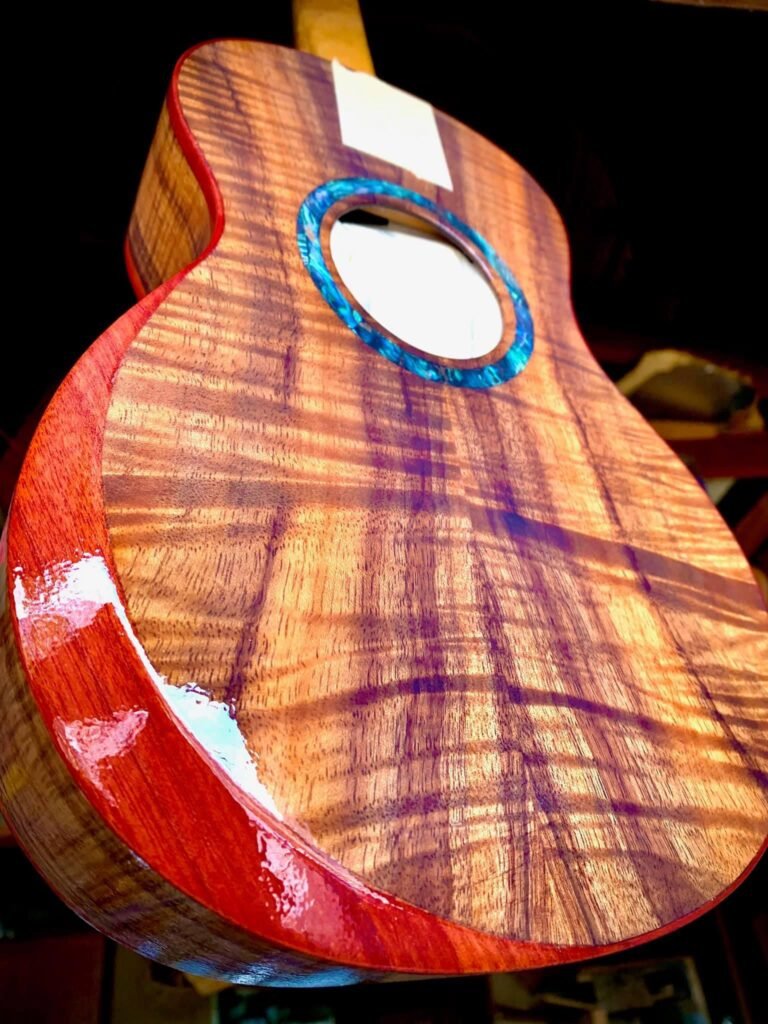
A guitar’s finish does two jobs at once: it protects the wood from moisture, dirt, sweat and dents, and it gives the instrument its visual personality — gloss, satin, color, or aged relic. But finishes are also additional mass glued to the wood. That matters: the more coating you add to a vibrating panel (especially the top of an acoustic), the more you change its mass and damping, and the more you can reduce projection, clarity and resonance. This post explains the tradeoffs, compares lacquer, polyurethane (and polyester/UV-cured variants) and oil finishes, and gives practical targets for “ideal” film thickness on acoustic vs electric instruments — plus brand examples so you can picture what manufacturers actually do.
The physics in plain English
Soundboards vibrate best when they are light and flexible in the right ways. A finish is denser than wood (finishes are often several times denser than spruce), so even a thin film adds mass and increases damping — it filters (reduces) some of the board’s vibrations. Luthiers rely on careful bracing and selective finish application to let the “good” vibrations through while taming harsh overtones, but too much film (or a very stiff film) will deaden the sound. In short: finish = protection + mass + damping. Balance matters.
Typical thicknesses — what the numbers mean
Finish thickness is often quoted in mils (thousandths of an inch) or microns (µm). For reference: 1 mil = 0.001″ ≈ 25.4 µm.
Practical, broadly observed ranges from manufacturers and luthiers:
- Ultra-thin / “vintage” lacquer or thin poly on some acoustics: ~3–4 mils (≈75–100 µm). Many luthiers and premium builders aim there for soundboards. Taylor, for example, documents an ultra-thin gloss option around 3.5 mils, while their standard gloss averages ~6 mils.
- Typical modern finishes (mass-produced guitars): roughly 0.005″–0.010″ (5–10 mils; ~125–250 µm). This covers many factory poly/urethane jobs. That range is a commonly cited “typical” finish thickness across many models.
- Thicker poly/urethane on some electrics / heavily finished guitars: can be more — a thick poly build can reach into the teens of mils in some cases (higher mass, more protection; luthiers often report thick poly finishing feeling a lot more “coated”). Forum and shop measurements vary widely.
Those numbers help explain why many high-end acoustic builders pursue the thinnest workable finish possible, while electrics — where the top’s acoustic role is much smaller and durability/appearance often rank higher — tolerate or even prefer slightly thicker, more durable systems.
Finish types: how they behave
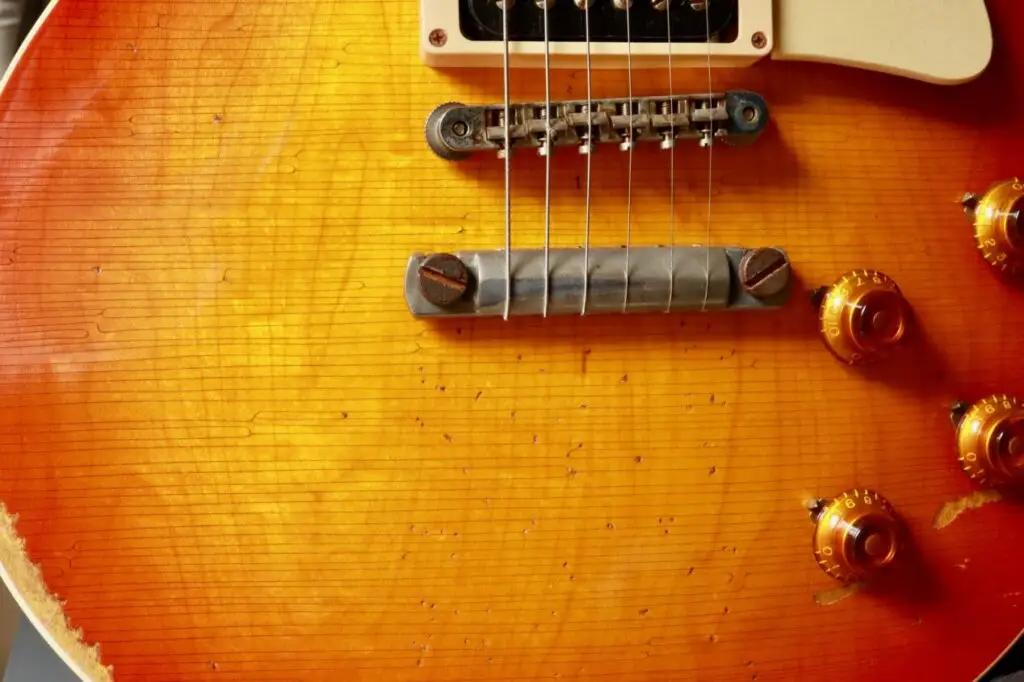
Nitrocellulose lacquer (nitro)
- Character: Traditional, thin feeling, tends to check and age attractively over decades. Beloved by vintage purists who like the way it “breathes” and the thin film feel on the neck and body. Gibson still documents using nitro in many of its classic-inspired lines.
- Acoustics: Nitro can be applied thinly and remains a preferred choice when players prioritize tone and natural resonance. Typical nitro builds for guitars often aim for relatively low film builds (a few mils per layer, multiple thin layers).
- Electrics: Many custom shops and vintage-reissue electrics use nitro for feel and aging; modern mass-production moved away because nitro is slower to cure and less durable against chemicals and knocks.
Pros: thin, easy to repair, vintage look/feel.
Cons: less resistant to wear, can yellow or check, more flammable/toxic to spray. Check local state laws for nitro
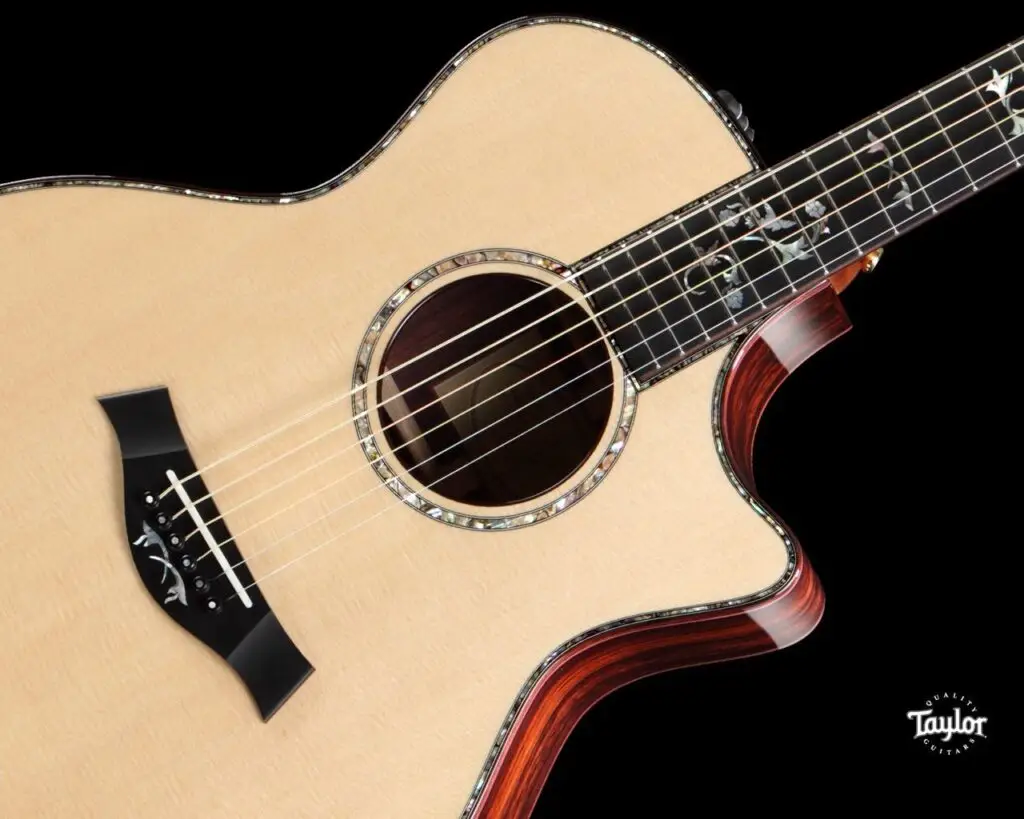
Polyurethane / Polyester / UV-cured poly
- Character: Hard, tough and durable. Can be applied in thicker films and sanded to high gloss quickly. Taylor uses UV-cured polyester/poly finishes for many models and quotes average film thicknesses — standard gloss ~6 mils, ultra-thin ~3.5 mils for certain lines.
- Acoustics: A thick poly film can damp an acoustic top more than a thin lacquer film of the same thickness; that’s why many acoustic builders either thin poly on the top or use alternate finishes.
- Electrics: Poly is popular because of its durability and consistency. On electrics, any tonal damping from thickness is usually less noticeable because pickups and the instrument’s design dominate amplified tone.
Pros: very durable, UV/polyester variants cure fast and resist yellowing.
Cons: heavier film, harder to repair (new poly won’t melt into old poly the way lacquer blends).
Oil finishes (Tung, Tru-Oil, hard wax oils like Rubio)
- Character: Penetrating oils (with or without hardeners) leave a thin, low-build finish that highlights wood texture and leaves less film mass on the top. They can be applied as a few thin coats for a “bare wood” feel or built up into varnish-like films with many coats. Tru-Oil and other gunstock oils are commonly used on necks and body tops for a natural feel. Rubio Monocoat and other hard-wax oils are used for bodies and furniture for durability with minimal film thickness when applied per instructions.
- Acoustics: An oil finish (properly applied) can be extremely light and acoustically transparent — great for resonance. But oils provide less impact resistance and scratch protection than a hard poly.
- Electrics: Often used on necks and some solid bodies where a raw, played-in feel is desired (and where the extra protection of a poly top-coat isn’t necessary).
Pros: thin, natural feel, easy to touch up.
Cons: less surface protection unless heavily built up; many coats may turn it into a varnish-like layer and negate the acoustic advantage.
Practical guidelines (what to pick)
- Acoustic guitar — prioritize resonance: Aim for the thinnest practical protective film on the soundboard. Target ~2.5–6 mils (≈60–150 µm) total film on the top if you want a lively, projecting guitar; lower is better for open sound, but you must accept trade-offs in surface protection. Many premium makers and luthiers choose thin nitro or very thin modern lacquers/catalyzed lacquers for higher-end acoustics, or selectively thinner poly/UV systems only on non-vibrating areas.
- Electric guitar — prioritize durability & finish look: You can tolerate thicker poly or polyester builds (6–15+ mils) without wrecking the playing or amplified tone. If you want the “vintage open” sound, a thin nitro finish or a lightly oiled body will be perceived as nicer to play, but most players choose poly for reliability and consistency.
- Necks / fretted surfaces: Many players prefer satin-poly, thin nitro, or oil finishes (for grip and feel). Whatever you choose, a thin neck finish improves tactile comfort without much tonal consequence.
Brand examples (real-world context)
- Gibson: continues to use nitrocellulose lacquer in many of their Custom/Classic lines and documents the process — a classic example of nitro’s role in electric/vintage instruments.
- Taylor: uses UV-cured polyester/poly finishes on many models and openly cites their standard gloss ~6 mils and ultra-thin ~3.5 mils options, showing the industry tradeoffs between protection and openness.
- Martin (and other premium acoustics): often use thin lacquer builds on higher-end acoustics to preserve top resonance while balancing protection and finish aesthetics. Forum and manufacturer specs commonly put lacquer top builds in the low mil range.
- Tru-Oil / hard wax oils: widely used by builders for necks and “played-in” finishes; many DIYers use it to preserve wood feel with minimal film build (but know that many coats build up film if overapplied).
Bottom line — how to choose
- If your priority is acoustic projection and natural resonance, opt for the thinnest finish the builder will allow on the soundboard (thin lacquer or carefully applied thin poly/UV), or an oil finish when appropriate. Expect some compromise in surface toughness.
- If you need durability, ease of repair, and a rock-ready finish (especially on electrics and gigging instruments), polyurethane/polyester systems give the protection you want — accept a slightly heavier film and, potentially, a subtle reduction in acoustic openness.
- For necks and player contact areas, consider oil or thin satin finishes for feel. I personally prefer satin finish for a neck over gloss.
